Career Development in 2026: A Practical Guide to Career Planning and Growth
Maan C.
May 21, 2026
14 min read



Most people were taught to pick one career and stick to it. That advice is outdated — and following it blindly can actually slow you down.
In 2026, careers do not follow a straight path. People shift roles, learn new skills, and build income in ways that did not exist a decade ago. A degree can still open doors, but it is no longer the only key — and in many fields, it is no longer even the main one.
If you feel uncertain about your direction right now, that is not a problem. It is the normal starting point for almost everyone who eventually figures it out.
This guide covers career development, career planning, and career growth in 2026 in plain terms — based on verified employer research, global workforce data, and observed hiring patterns.
Career development in 2026 follows a repeatable framework: Clarity → Skills → Proof → Opportunities. Skills-based hiring is displacing degree-first hiring across industries. The most in-demand skills through 2030 are analytical thinking, AI and big data fluency, and creative thinking. Most people stall not from lack of talent but from learning without applying. This guide walks through each stage with verified data and concrete steps.
Who This Guide Is For
- College students preparing for their first career path
- Fresh graduates who feel uncertain about job direction
- Career shifters exploring new opportunities
- Freelancers and self-learners building skills independently
Whether you are entering a local job market or competing for global remote work, the core principles are the same. Hiring practices vary by region, industry, and employer size — but skills visibility, adaptability, and demonstrated competence are increasingly relevant across markets.
Why Most Career Advice Does Not Work
Most career advice is too general, built on outdated assumptions, or designed for a job market that no longer exists.
The old model: Study → Graduate → Get a job → Stay there.
The current reality: Learn → Apply → Adapt → Repeat.
Following the old model in a changing market does not guarantee failure — but it will slow your career growth and reduce your flexibility at exactly the moment when adaptability matters most.
What Career Development Actually Means Now
Career development is the ongoing process of building skills, gaining experience, and adapting to create better opportunities. It is not about choosing the right job once. It is about building a system that keeps working even when the job market changes.
A useful framework:
Clarity → Skills → Proof → Opportunities
- Clarity gives direction
- Skills make you valuable
- Proof builds credibility
- Opportunities follow from those three
Most people skip the first three and jump straight to opportunities. That is where progress stalls.
The Shift in How Hiring Works

Hiring practices are changing in measurable ways. According to the Kelly Global Re:work Report, nearly two-thirds (65%) of global executives say their organizations are moving from degree requirements to skills-based hiring. Separately, 75% of recruiters say skills-based hiring will be their top priority going forward (LinkedIn Future of Recruiting Report, 2025).
This shift is not universal — credential requirements still matter in many professions, regulated industries, and large institutional employers. But the direction is clear: demonstrated competence and visible output are being weighted more heavily alongside formal qualifications, particularly in digital, knowledge-work, and remote-first roles.
Step 1 — Understand Yourself Enough to Move Forward
You do not need perfect clarity. You need usable clarity.
Focus on three things:
- Skills — what you can currently do or are willing to learn
- Interests — what keeps your attention long enough to build real competence
- Preferences — how you like to work (independently, with others, structured, or flexible)
Quick self-check — rate each from 1 to 5:
- I enjoy solving problems
- I prefer structured tasks
- I like working with people
- I enjoy working independently
- I am comfortable learning new tools
Look for patterns, not perfect scores. Patterns across multiple ratings are more reliable than any single answer.
Example: Someone who rates high on organizing tasks, structured work, and helping others might explore project coordination, operations management, or virtual assistance. That becomes a starting point you can refine — you do not need the full picture before you begin.
Step 2 — How to Choose a Career Path
Instead of asking "what career should I choose?" — ask "what kind of work do I want to do consistently?" The second question is answerable.
The Three Main Career Path Types
Simple decision filter:
- Want predictability → structured
- Want flexibility → freelance
- Want both → hybrid
You can move between these paths as your career evolves. Nothing is permanent.
Step 3 — Learn Skills That Actually Move Your Career Forward
Not all skills create equal opportunity. Some look impressive but do not generate consistent demand. Others seem basic but are genuinely valuable across industries.
What the Data Says
According to the World Economic Forum's Future of Jobs Report 2025, analytical thinking remains the most sought-after core skill among employers — with 7 in 10 companies considering it essential. AI and big data tops the list of fastest-growing skills, followed by networks and cybersecurity and technological literacy. Creative thinking and resilience, flexibility, and agility are also rising rapidly in importance through 2030.
These are not narrow technical skills. They apply across industries and roles.
High-Value Skills for 2026
Digital skills: Content creation, data handling, using AI tools effectively, basic SEO, workflow automation
Cognitive skills: Analytical thinking, creative problem-solving, decision-making under uncertainty, systems thinking
Human skills: Communication, collaboration, adaptability, active listening
Transferable skills: Writing, research, organization — these support long-term career growth across multiple paths regardless of how industries shift
The Skill Loop
Learn → Apply → Improve → Repeat
More learning does not guarantee progress. Applied learning does. Instead of completing multiple courses without producing output, learn the basics, build two to three projects, and improve based on feedback. In many hiring processes today — especially for digital and knowledge-work roles — portfolios and work samples are reviewed before formal qualifications.
Step 4 — Build Experience Before You Feel Ready
Waiting for a job before gaining experience is one of the most common ways people slow their own career development. Experience is something you build — often before anyone gives you permission.
The Experience Ladder
- Personal projects — self-directed work that demonstrates skill
- Free or small-scale work — builds your first real samples
- Paid beginner work — converts proof into income
- Consistent clients or stable roles — establishes a track record
You move through these stages. You do not skip them.
Example: A beginner writer starts by writing sample articles, builds a small portfolio, offers initial free work to demonstrate ability, and transitions to paid work once the samples prove competence. Progress starts with visible output — not waiting for formal approval.
Step 5 — Build a Personal Brand That Reflects Reality
A personal brand is not about being everywhere online. It is about being clear enough that people understand your value without having to ask.
Start with:
- A professional LinkedIn profile or a profile on the platform most active in your field
- A simple portfolio — two to three strong, recent samples of your actual work
- Proof of skills in action, not just a list of skill names
What to show: Projects, skills demonstrated through real work, measurable results where possible, and progress over time.
What to avoid: Posting activity without substance. Positioning yourself as an expert before doing the work. Copying another person's brand voice — it shows, and it fails.
Clarity builds trust faster than appearance. A profile that is honest about where you are and specific about what you can do is more compelling to a hiring manager than one that overstates and under-delivers.
Step 6 — Use Online Courses the Right Way
Online learning supports career planning and skill development — but only when applied. Completing a course is not a career achievement. Applying what the course taught is.
Platform Comparison
The real rule: Start with one course. Apply what you learn before starting another. Decide what to learn next based on what you are actually missing — not what looks impressive.
Step 7 — Build a Career Roadmap That Adapts
You do not need a perfect long-term plan. You need a direction that can evolve.
The 3-Phase Career Development Model
Phase 1 — Build (Months 0–6)
Learn core skills. Create projects. Establish proof of capability before applying for roles.
Phase 2 — Prove (Months 6–24)
Show results in real work contexts. Gain consistent experience. Build a track record that is visible to others.
Phase 3 — Grow (Year 2 onward)
Improve income, compensation, responsibility, or flexibility. Growth is not only vertical promotion — it can also mean negotiating better pay, moving into higher-value roles, or expanding into adjacent opportunities.
Realistic Career Development Timeline
Step 8 — Approach Opportunities Strategically
Applying randomly is one of the least effective job search strategies. Every application that does not match your demonstrated skills is time spent on a long shot.
Application Strategy
- 70% realistic roles — positions you are qualified for now
- 20% stretch roles — positions requiring one or two skills you are close to having
- 10% experimental — positions in adjacent areas you want to explore
Why Applications Fail
- No proof of work submitted
- Generic resumes that describe duties instead of results
- No clear skill direction connecting the application to the role
- Not customized to the specific position
Networking and the Hidden Job Market
Research consistently shows that up to 70% of jobs are never publicly listed — filled instead through referrals, internal promotions, and professional networks (CNBC Careers). Job seekers who apply through a personal referral are 4 times more likely to receive an interview than those who apply through a job board.
Engage genuinely with professionals in your field. Share your progress. Ask specific questions rather than general ones. Opportunities follow consistent, visible presence over time — not a single cold message.
Career Mistakes That Stall Growth
Most people do not fail — they stall. The patterns are consistent:
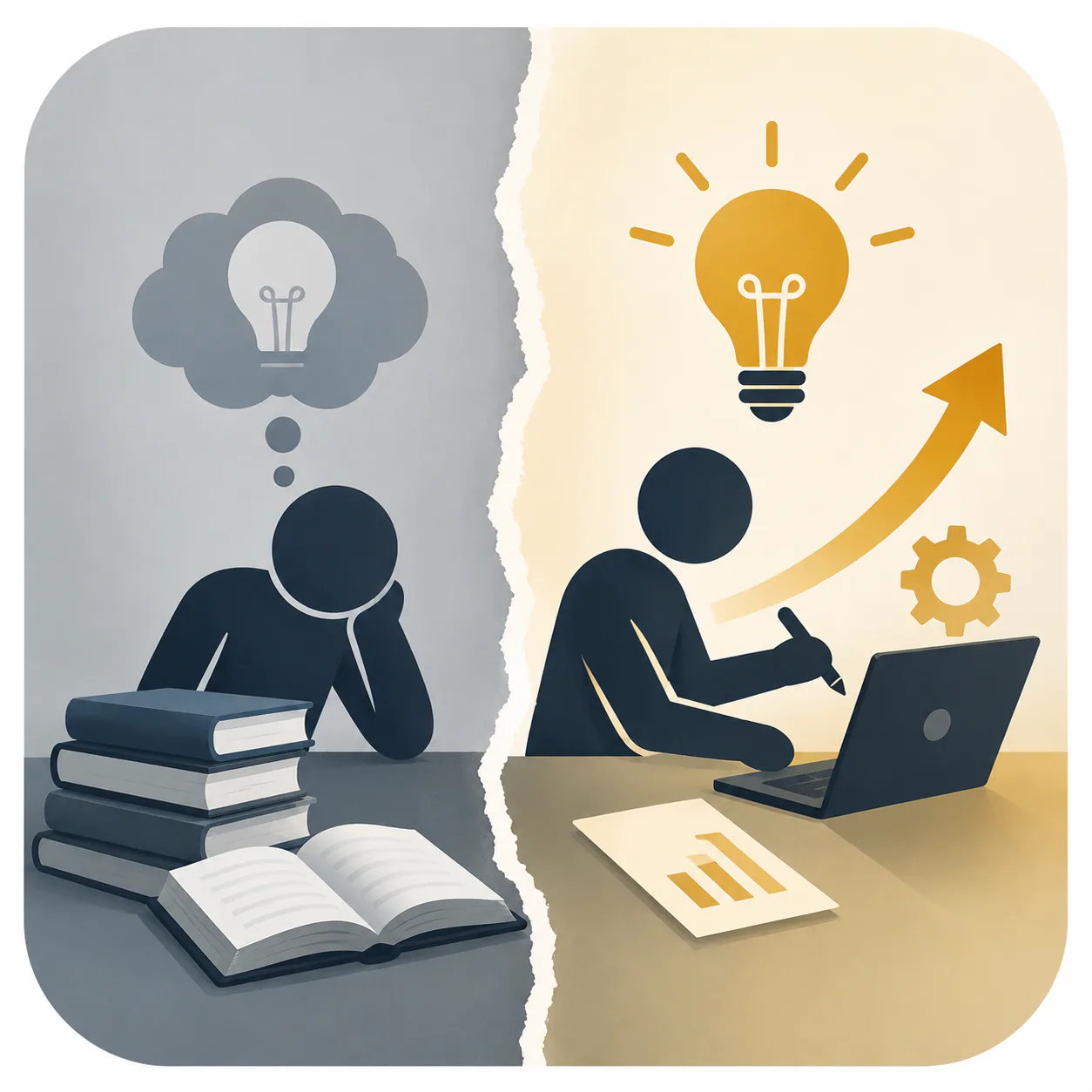
Learning without applying
Accumulating knowledge without producing output others can see and evaluate.
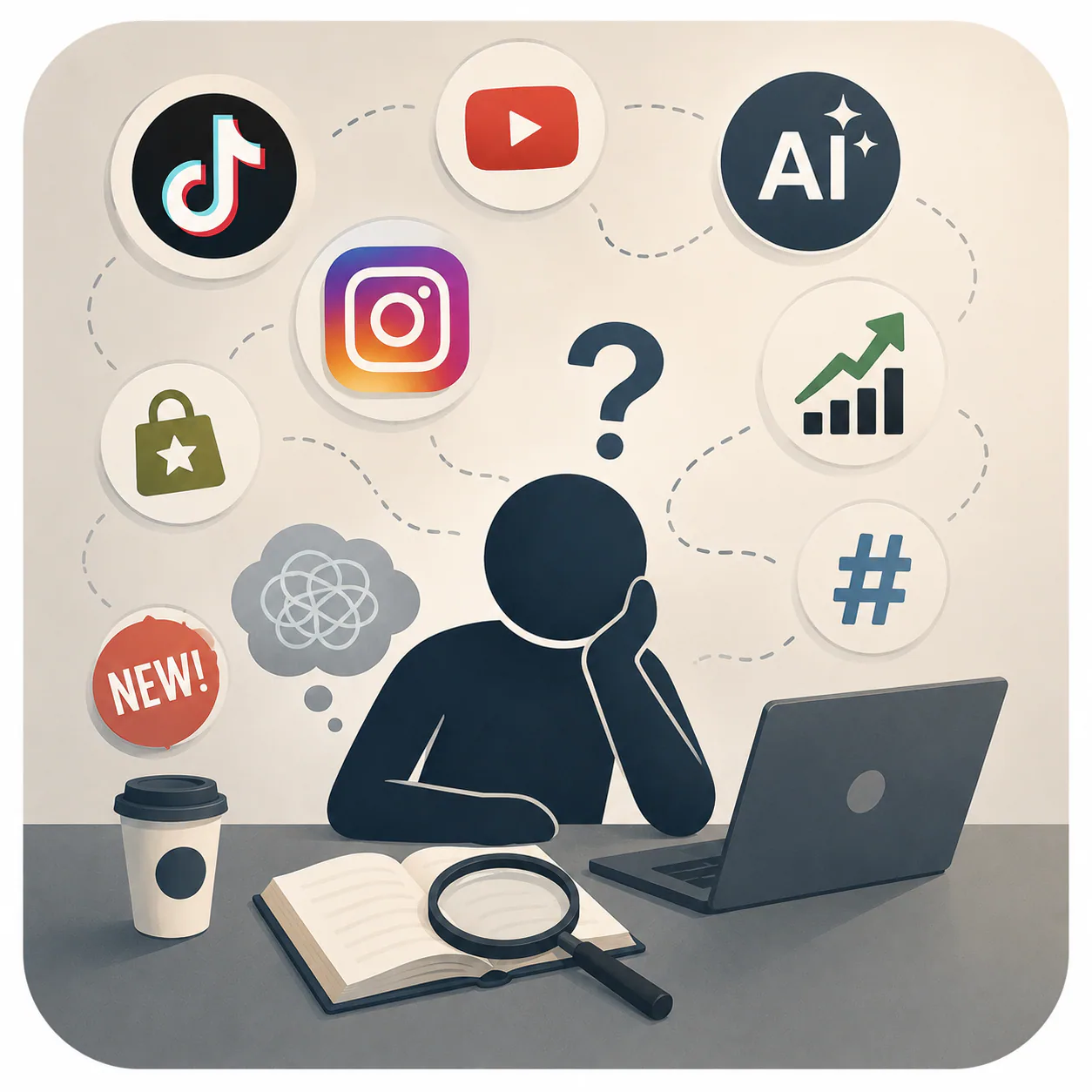
Chasing trends without understanding them
Pursuing whatever skill gets the most coverage without evaluating whether it is relevant to your actual career direction.

Waiting to feel ready
Readiness is built through action, not preparation. Most people who felt ready were made ready by doing the work.
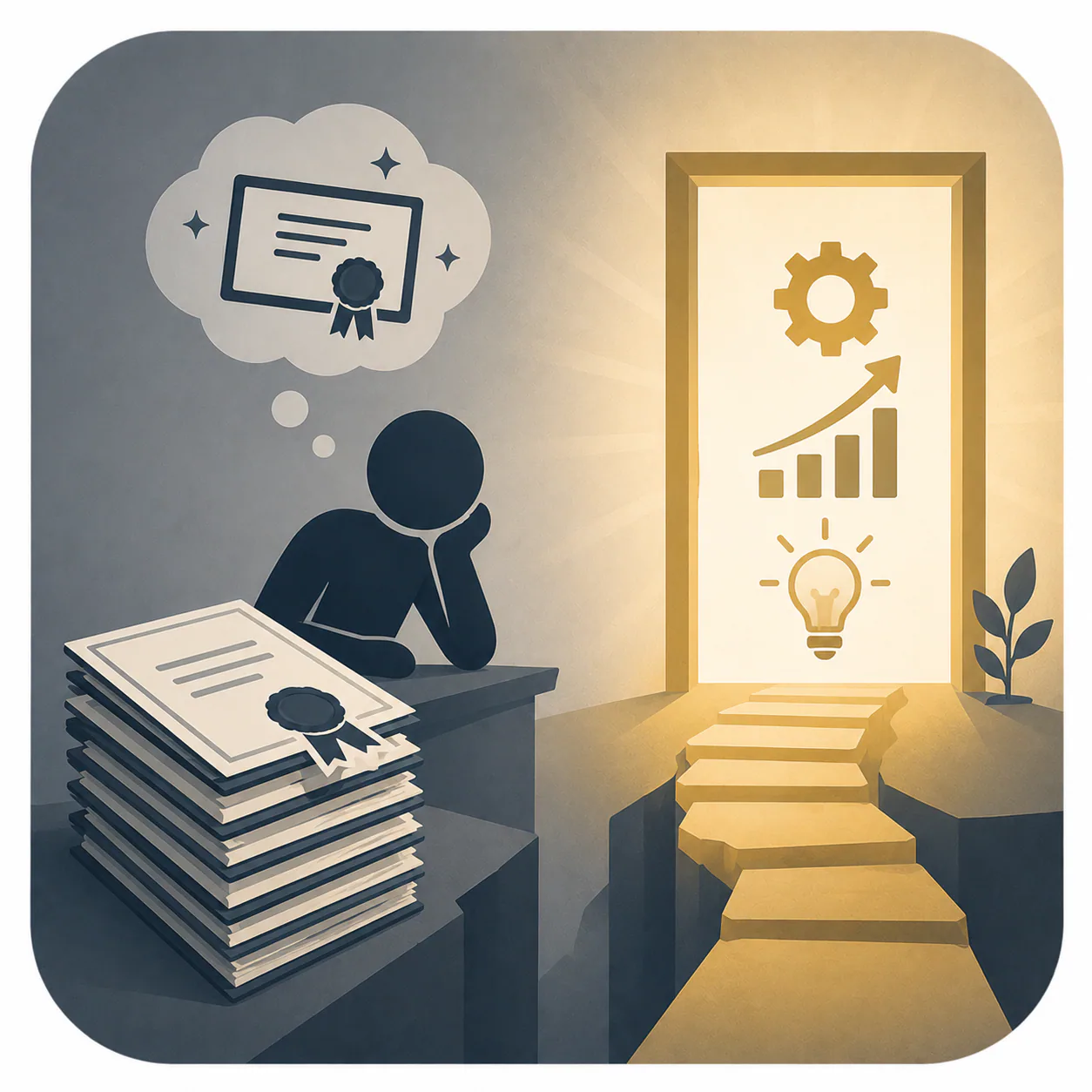
Relying only on certificates
Credentials signal that you completed a program. Work samples signal that you can actually perform the skill. Most hiring managers are more interested in the second signal.

Ignoring relationships
The professional network you build during your career is often the source of the best opportunities. Treating skill development as a solo activity limits your own access.
The Reality of Careers in 2026
According to the WEF Future of Jobs Report 2025, employers expect 39% of key skills required in the job market will change by 2030 — which means continuous adaptation is not optional; it is structural.
AI will not replace all jobs. But it will change what valuable work looks like. Skills such as AI and big data, analytical thinking, creative thinking, resilience, and technological literacy are considered critical now and are projected to become even more important through 2030. Roles that require synthesis, relationship-building, strategic thinking, and contextual judgment are not going away.
The people who move forward are not always the most talented. They are often the ones who apply what they learn earlier and more consistently than others. That advantage compounds over time.
Frequently Asked Questions About Career Development
How long does it take to build a career?
Most people reach consistent paid work within the first year if they actively build proof of work. A stable, growing career typically takes two to four years of consistent application. The timeline shortens significantly for people who start building projects before job searching rather than after.
Can I switch careers without a degree?
Yes — and it is increasingly common. The most effective path is to identify the skills the new field values, build demonstrable proof through projects or entry-level work, and enter the field at a realistic level before advancing. Many successful career switchers moved laterally — into an adjacent role first — before reaching their target. Trying to jump directly to a senior position in a new field without a track record rarely works, regardless of credentials.
What is the difference between career development and career planning?
Career planning is the process of setting direction — identifying goals, mapping paths, and deciding where to focus. Career development is the ongoing work of building the skills and experience to actually reach those goals. Planning without development produces a map with no movement. Development without planning produces progress without direction. Both are necessary and they reinforce each other.
How do I know if I am in the right career?
The most reliable signal is not satisfaction — it is energy. A career direction that sustains your attention and effort over time, even when it is difficult, is more likely to be right for you than one that requires constant motivation. If you consistently avoid the core tasks of your role rather than the surrounding friction, the direction may need reassessing.
Is it too late to start over at 30, 40, or 50?
No. Career switching at any age follows the same structure: identify transferable skills, build new proof of work, enter at a realistic level, and progress from there. Skills from previous careers — management, communication, domain knowledge — frequently transfer and accelerate progression beyond what someone starting completely fresh could achieve.
What is skills-based hiring and how does it affect my job search?
Skills-based hiring means employers evaluate candidates based on demonstrated ability to perform specific tasks — rather than relying primarily on degrees, job titles, or years of experience. The shift is measurable: 65% of global executives say their organizations are already moving in this direction (Kelly Global Re:work Report, 2025). For job seekers, portfolios, work samples, and demonstrated output now carry more weight than credentials alone in many roles.
Conclusion
You do not need everything figured out. You need to start.
Build useful skills. Apply what you learn. Improve through experience.
Employers expect that nearly two-fifths of existing skill sets will be transformed or become outdated between 2025 and 2030 (WEF Future of Jobs Report 2025). That is not a threat — it is an argument for building the habit of learning and applying continuously, starting now.
Careers are no longer built through one decision. They are built through repeated, intentional steps. The framework is always the same: clarity, then skills, then proof, then opportunities. The sequence is what makes it work.
Primary Sources
- World Economic Forum. Future of Jobs Report 2025. January 2025. weforum.org/publications/the-future-of-jobs-report-2025
- Kelly Services. Global Re:work Report. 2025.
- LinkedIn. Future of Recruiting Report. 2025. business.linkedin.com/talent-solutions/resources/future-of-recruiting
- CNBC Careers. Referral hiring and hidden job market data. Via Apollo Technical, 2026. apollotechnical.com/networking-statistics

About the Author
Maan C. is a Filipino writer, blogger, and self-described frustrated journalist who finally found her voice through writing. She holds a degree in psychology, a diploma in Special Education, and spent eight years in the classroom — teaching English as a Second Language to Korean students and handling preschool classes before stepping away to raise her family. After a decade as a full-time mother, she re-entered the workforce as a company-trained SEO specialist and virtual assistant, rebuilding her career from scratch before pivoting to full-time blogging. She writes about everything that genuinely interests her — technology, AI, education, careers, freelancing, travel, finance, real estate, and more — drawing from lived experience, serious research, and a lifelong habit of wanting to understand how things actually work. She describes AI as the tool that finally let her write the way she always wanted to: freely, clearly, and without holding back. Read more of her work at pixelscoop.com.
In this article, Maan draws from her own experience navigating a 10-year career gap, re-entering the workforce in a completely new field, and rebuilding income from the ground up.