
Freelance Pricing Guide for Beginners: How to Charge for Your Work
Maan C.
May 21, 2026
14 min read



Pricing is the decision that beginners get wrong more often than any other.
Not because they don't care — but because the advice online is genuinely contradictory. "Charge premium from day one." "Start cheap until you build experience." "Never charge hourly." "Always charge by value." Each of those is repeated confidently, and none of them applies universally.
What makes this harder is that most beginners don't have market data to work from. They guess, copy someone else's rates without understanding the business behind them, or price out of fear rather than reasoning. According to a 2026 survey of 500 active freelance writers, 78% charge 40% below market rate for their actual experience level. Writers are not unique here — the pattern of underpricing driven by insecurity appears across service types and is well-documented. Best Writing
This guide is designed to replace guesswork with a practical framework: what the common pricing models actually are, what market rates look like by service type, what factors legitimately affect your rates, and how to build a pricing process that improves over time.
Freelance pricing is not a number — it is a decision-making process that improves with each project. The right pricing model depends on the type of work, not a universal rule about hourly versus project rates. Beginners consistently underprice out of fear rather than strategic positioning, and extremely low rates rarely attract better clients — they typically attract more demanding ones. Platform fees on Upwork (0–15%) and Fiverr (20%) directly reduce your net earnings and must be factored into any rate you quote. Rate increases are not earned by waiting — they are earned by improving delivery quality, narrowing scope, and building evidence of results.
Who This Guide Is For
- Beginners who have a service in mind but don't know what to charge
- Freelancers who suspect they're underpricing but aren't sure how to fix it
- Anyone confused by contradictory pricing advice online
- Career returners pricing services in a new field for the first time
Quick Answer: How Should Beginners Price Freelance Work?
The most practical beginner approach is not a number — it's a process:
- Choose a pricing model that fits the type of work you are doing
- Define project scope clearly before quoting anything
- Research how similar services are positioned in your actual target market
- Factor in platform fees when working through marketplaces
- Start with clearly scoped work rather than vague open-ended projects
- Adjust rates as delivery quality, efficiency, and credibility improve
There is no universal correct rate. A beginner virtual assistant, freelance writer, graphic designer, and developer are not pricing the same type of work — and even within each category, rates vary significantly by experience level, niche, client type, and geography. The better question is not "what should I charge?" It is "what pricing structure makes sense for the work I'm actually offering?"
Why Freelance Pricing Feels So Confusing

Pricing feels difficult because freelancing has no fixed salary framework. In traditional employment, compensation is largely set for you. In freelancing, you set it yourself — without a reference point, without a manager to validate it, and without knowing whether clients will say yes or walk away.
Conflicting Advice Creates Noise
Every piece of pricing advice you encounter online is responding to a specific context — and usually doesn't disclose what that context is. "Charge premium immediately" makes sense for a specialist with strong positioning and an established network. It is less useful advice for someone with no clients yet. "Start cheap to build experience" has logic behind it but leads to real problems when applied too aggressively or for too long. "Never charge hourly" is sometimes true for certain service types and completely wrong for others.
The advice isn't always wrong. The missing context is.
Comparing Yourself to Other Freelancers Creates Distortion
Searching "average freelance design rates" is understandable — but the numbers you find rarely tell you the full story. The freelancer charging significantly more may have years of experience, a narrow specialization, stronger positioning, repeat clients, faster delivery systems, or a higher-value target market. Copying someone else's pricing without understanding their business situation leads to poor decisions in both directions.
Pricing Triggers Emotional Reactions
This part is rarely discussed directly. Pricing is not purely logical — it brings up fear of rejection, fear of sounding expensive, fear of being judged as inexperienced, fear of losing the opportunity entirely. That emotional pressure is the main reason beginners consistently underprice. Recognizing it doesn't eliminate it, but naming it helps you make more reasoned decisions.
Freelance Rate Benchmarks by Service Type
Before discussing pricing models, beginners need actual market data to orient against. The following ranges come from Upwork's 2026 earnings resource and reflect what freelancers charge on that platform — rates for direct client relationships off-platform are typically 20–30% higher.
Freelancers working through platforms typically charge 20–30% less than those with direct client relationships — a gap that underscores the long-term value of building your own client network. Upwork
These are ranges, not targets. Where you fall within a range depends on your experience level, niche depth, and the type of client you're serving. Content writing rates have declined 10–30% in recent years as AI tools reduced perceived complexity — which makes specialization and niche positioning more important, not less, for writers entering the market now. Knowledgelib
The Main Freelance Pricing Models

Different services naturally fit different pricing structures. There is no universally superior model — the right choice depends on the type of work and how clearly the scope can be defined.
1. Hourly Pricing
Hourly pricing means charging based on time worked. It works best when the scope of work can shift over time or is difficult to define precisely upfront.
Best fit for: virtual assistance, admin support, consulting, project coordination, research support, ongoing execution work, technical troubleshooting.
Advantages: Simple to understand and explain. Flexible when deliverables evolve. Practical for ongoing support relationships.
Limitations: Your earning capacity is directly tied to available hours. If you become more efficient over time, hourly billing can feel like a penalty for improvement. Some clients become overly focused on time rather than outcomes.
Beginner take: Hourly pricing is a practical starting point for certain service categories. It has real tradeoffs but is not inherently a weak strategy.
2. Project-Based Pricing
Project pricing means charging a fixed amount for a clearly defined deliverable — a landing page, a logo package, a set of blog articles, a website audit. The client pays for the outcome, not the hours.
Best fit for:
writing, design, web projects, editing, SEO deliverables, audits, implementation work.
Advantages:
Clients prefer cost predictability. Efficiency becomes an advantage — faster delivery doesn't automatically reduce income. Outcome-focused pricing reads as more professional in many service contexts.
Limitations:
Poor scope definition is the main risk. Vague work becomes unprofitable quickly. Scope creep — extra work that was never included in the original quote — is a common and expensive problem.
Beginner take:
Project pricing is often the strongest model for beginners, provided scope is clearly defined before quoting. A small, well-scoped project is significantly safer than a large open-ended engagement.
3. Retainer Pricing
Retainer pricing involves recurring payment for ongoing service — monthly blog content, social media management, admin support, or consulting advisory work. Rather than quoting project by project, the relationship becomes recurring.
Advantages:
More predictable income improves financial stability. Stronger client continuity reduces constant prospecting pressure. Operational efficiency often improves as you learn a client's systems and preferences.
Limitations:
Poor scope definition is particularly costly in retainers because the problems compound month over month. Availability expectations can become unclear unless boundaries are stated explicitly.
Beginner take:
Retainers are valuable, but most beginners should first build experience with clearly scoped project delivery before moving to recurring arrangements. Learning to define and defend scope is a prerequisite.
4. Value-Based Pricing
Value-based pricing focuses on the business impact of the work rather than the time it takes. A landing page that materially improves a client's lead generation might be priced to reflect that impact — not the hours required to write it.
Where it works:
Conversion copywriting, consulting, strategy work, revenue-impact projects. Situations where the commercial outcome is measurable and significant.
Why beginners misapply it:
Much of the advice promoting value-based pricing presents it as the automatically superior option — without mentioning that it requires strong positioning, credible discovery skills, and genuine business understanding to implement well. A beginner who doesn't yet know how to scope a project is not in a position to quantify its business value.
Beginner take:
Understand the concept and move toward it over time. Clear project pricing is a more practical first step for most beginners.
What Actually Affects Your Rates
Pricing is not determined by experience alone. Multiple variables shape what is reasonable — and most generic pricing advice oversimplifies this.
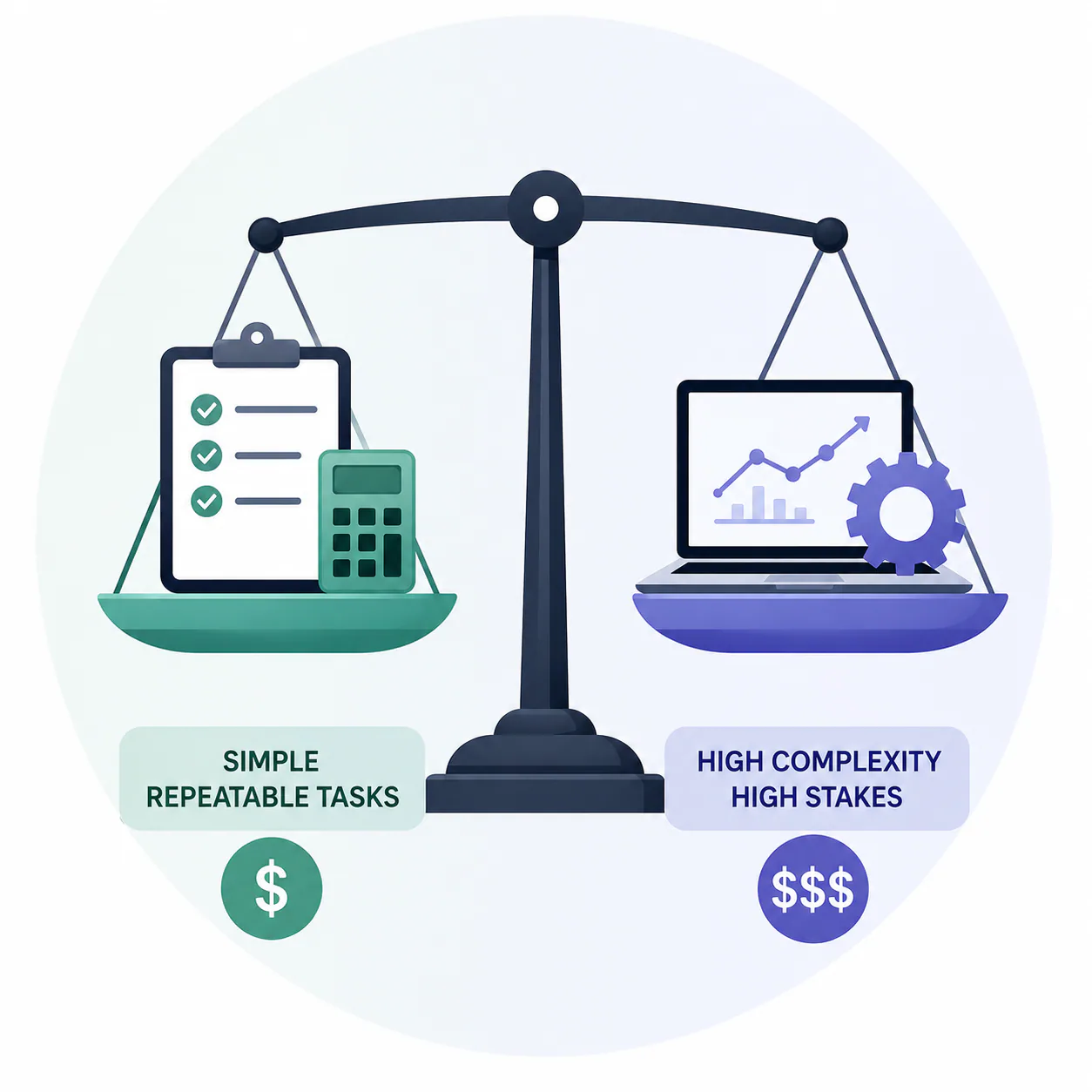
Service complexity.
Simple repeatable tasks price differently from high-complexity, high-stakes work. A basic data entry task and a technical consulting engagement are different problem types with different pricing expectations.
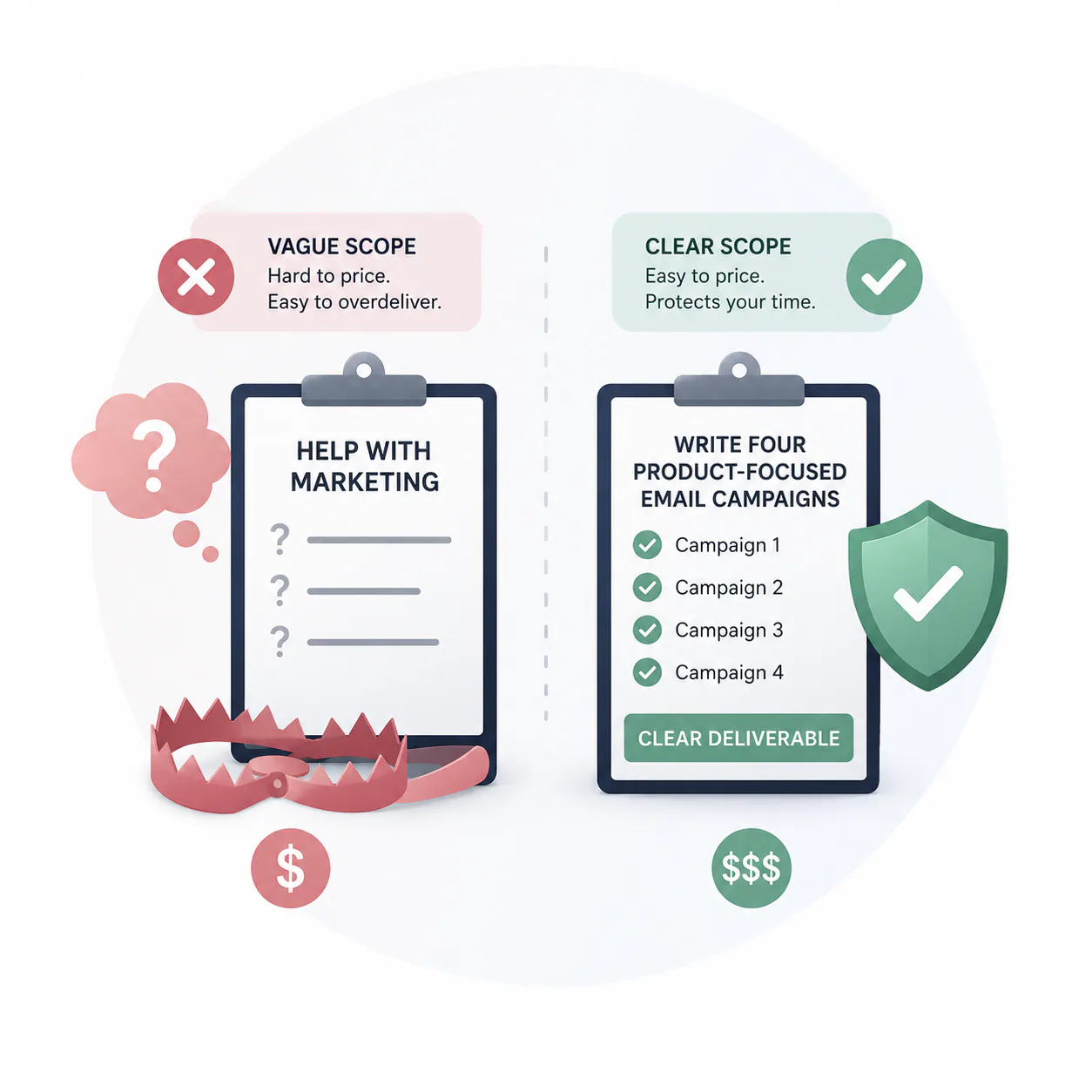
Scope clarity.
A clearly defined deliverable is easier to price accurately and protects your time. "Help with marketing" is a pricing trap. "Write four product-focused email campaigns" is a scope you can quote with confidence.

Target market.
The type of client matters significantly. A startup founder, a local small business, an enterprise client, and a solo consultant operate with different budgets and different expectations about what they're buying.

Geography.
This guide is written for a global readership. US rates are 2–5 times higher than Eastern European rates for equivalent work, and 3–8 times higher than South Asian rates. Avoid assuming one universal benchmark applies across markets — it doesn't. Knowledgelib

Specialization.
More specialized services support stronger pricing because replacement options are narrower. AI-adjacent skills currently command 25–60% higher rates than general practitioners in the same field. Specialization doesn't require technical skills — it requires depth in a specific problem type, industry, or content category. Jobbers
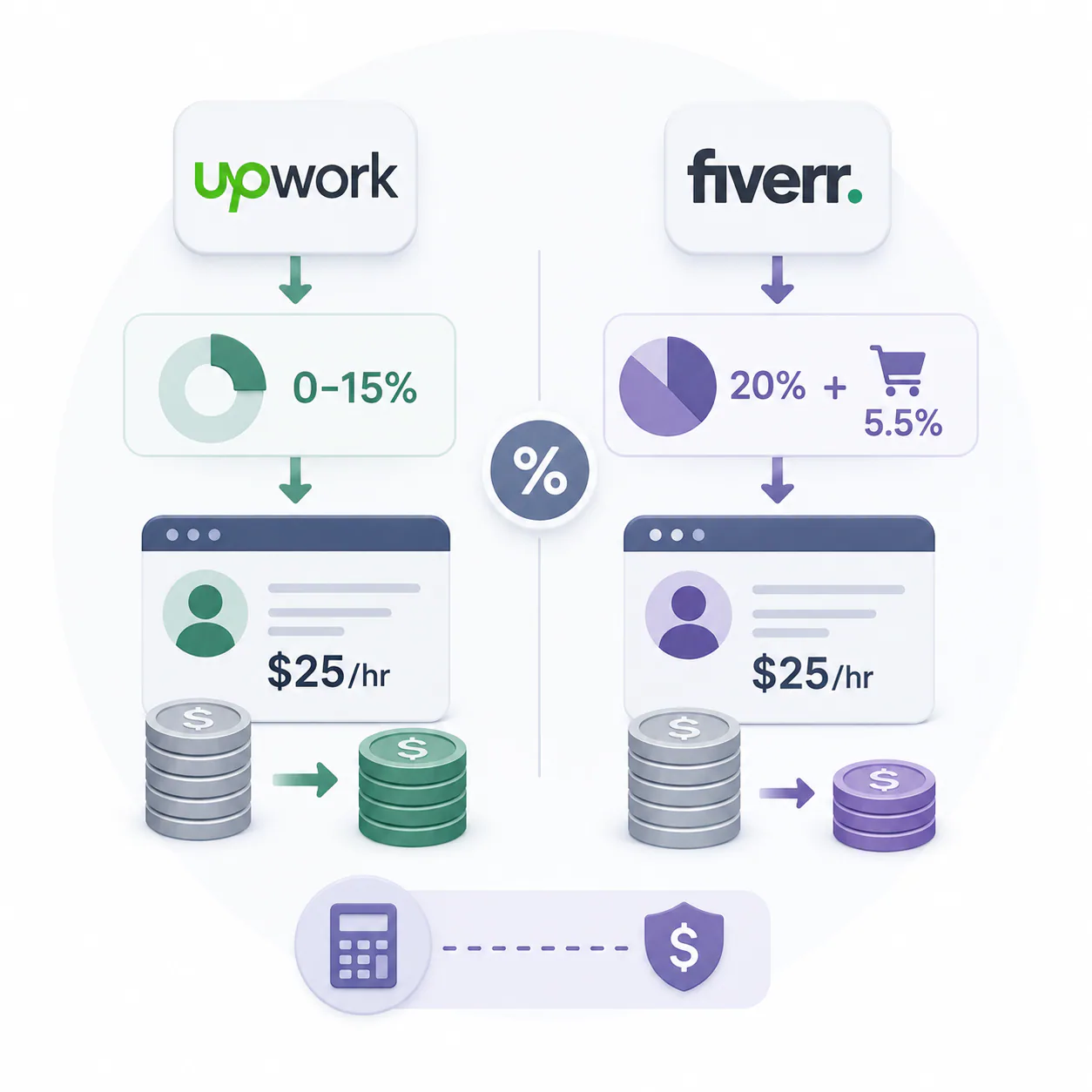
Platform fees.
If you work through a marketplace, fees reduce your effective rate. Upwork currently charges a variable 0–15% freelancer commission — approximately 10% typical — under the fee structure updated in May 2025. Fiverr charges a flat 20% from sellers, plus a 5.5% buyer fee. A quote of $25/hour on Fiverr may net closer to $20 after fees. Price with your net rate in mind, not just the headline number. Jobbers

Turnaround expectations.
Urgency changes pricing logic. Faster deadlines create real delivery pressure — and that pressure has value.

Revision scope.
A project with unlimited undefined revisions is not a simple project. Revision boundaries are a pricing decision, not just a communication preference.
How to Actually Price Your Freelance Work
Understanding models is useful. The practical question most beginners care about is simpler: what do I actually do when a client asks for a quote?
Start With Clearly Scoped Work
The easiest pricing mistake is quoting vague projects. "Can you help with marketing?" sounds like an opportunity. It is actually a trap — because "marketing" could mean strategy, copywriting, social content, campaign support, reporting, revisions, meetings, or implementation. Pricing vague work creates confusion, resentment, and scope creep.
A much safer starting point is clearly defined deliverables: four blog articles, a homepage rewrite, a logo package, ten social media graphics, inbox cleanup and workflow setup, a research summary report. Defined scope makes pricing easier and protects your time.
Choose a Model That Matches the Work
Recurring support work with variable scope → hourly or retainer. Clearly defined deliverables → project pricing. Trying to force the wrong pricing model onto the wrong type of work creates friction for both you and the client.
Factor In Platform Fees Before Quoting
If you are working through a marketplace, build platform fees into your rate before quoting. If your target net rate is $30/hour and the platform takes 20%, your listed rate needs to be $37.50 to achieve that. Most beginners ignore this and effectively discount their rates without realizing it.
Price for Sustainability, Not Fear
Fear-based pricing sounds like: "I'll charge as little as possible so someone says yes." The problem is that extremely low pricing consistently attracts poor-fit clients, increases scope abuse, creates resentment, makes professionalism harder to maintain, and makes future rate increases more difficult to justify. The most common pricing model among freelance writers is fixed per-project, used by 53.3% — and switching from per-word or hourly to per-project pricing is the structural change that most reliably increases income for intermediate freelancers. Low price is not a strategy. It is a starting point that needs to move. Best Writing
A Practical Pricing Thought Process
Client request: "Can you write website copy for our homepage?"
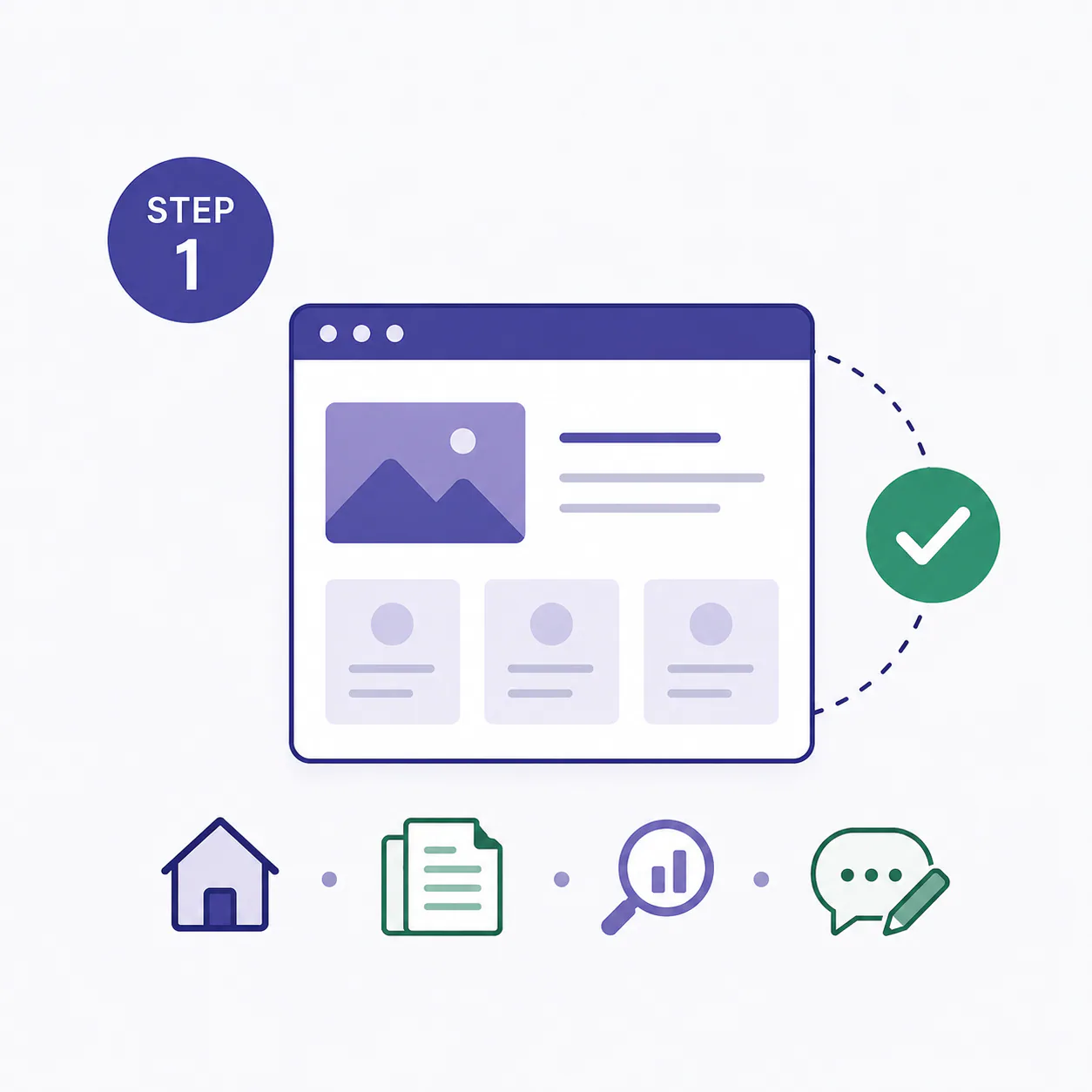
Step 1
What exactly is included? Homepage only? Supporting sections? Research? Messaging revisions?
Step 2
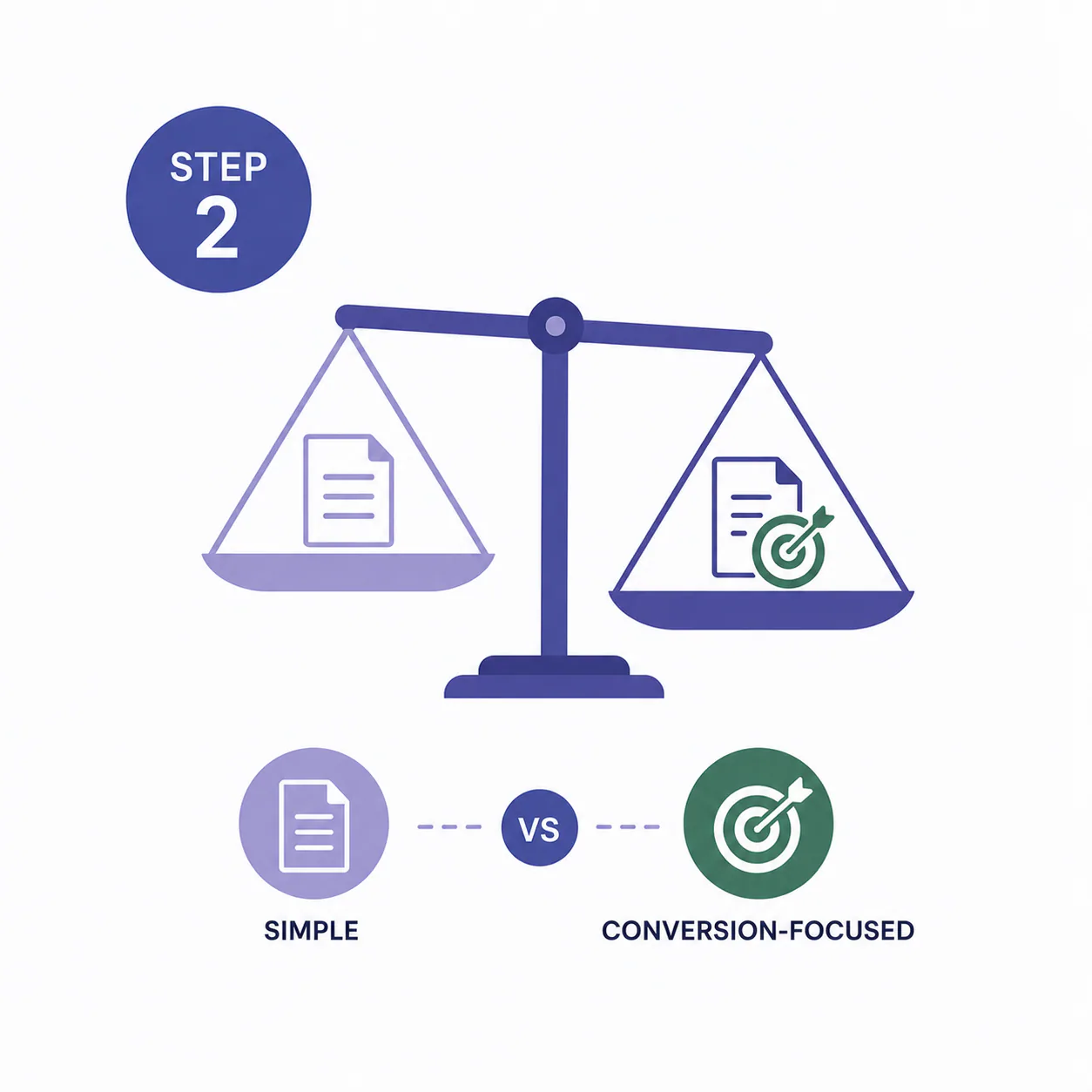
How complex is the work? Simple informational copy or conversion-focused copy requiring industry knowledge?

Step 3
What pricing model fits? Homepage copy is a defined deliverable — project pricing.
Step 4
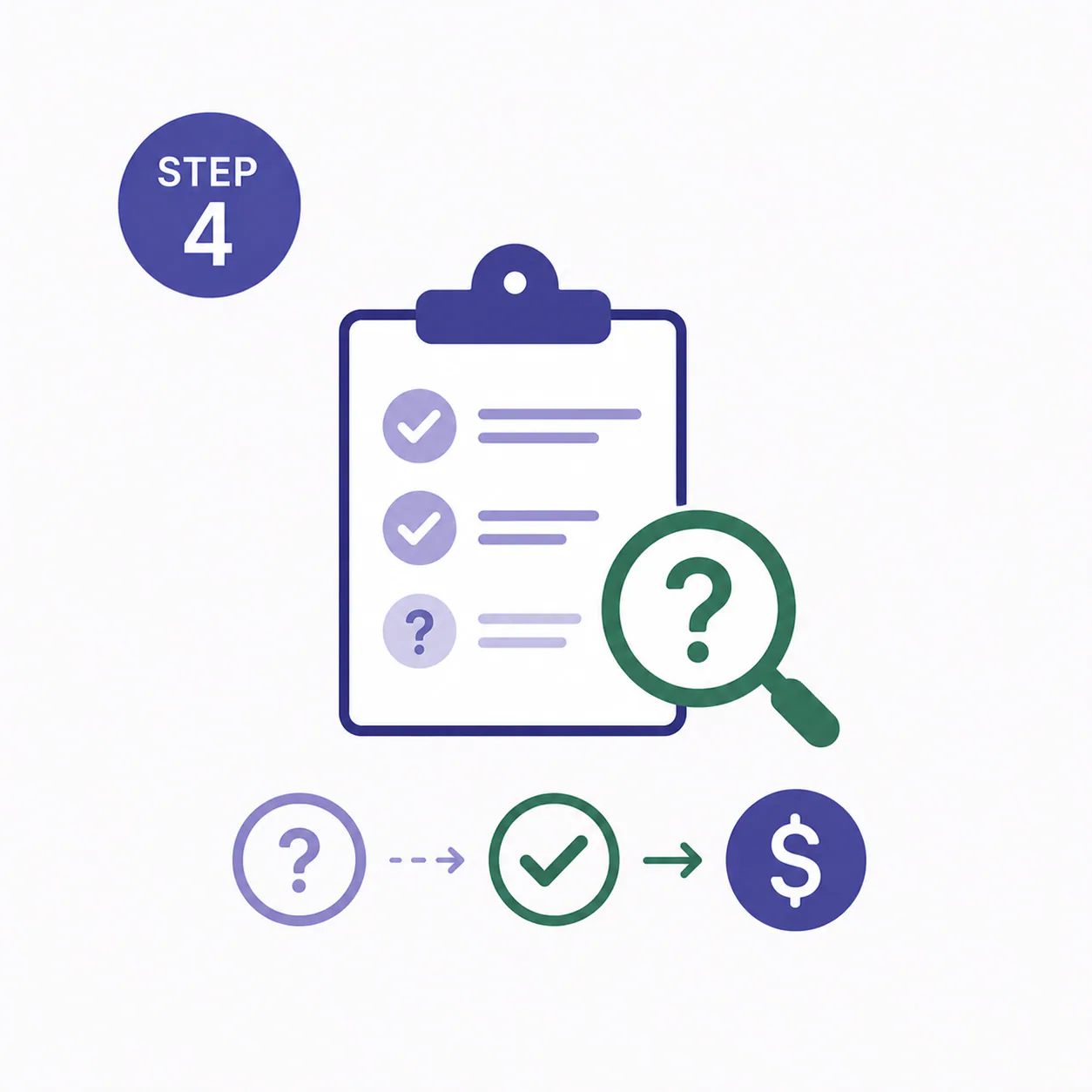
Is the scope clear enough to quote? If not, clarify before quoting. Pricing without scope clarity is guesswork.
Pricing improves when your process improves. The goal is not finding the perfect number — it's building a consistent approach that gets more accurate with repetition.
Common Beginner Pricing Mistakes
Charging too little because you feel new.
The internal logic — "I have no experience so I should be cheap" — is understandable but usually counterproductive. Low pricing does not automatically create trust. Sometimes it signals the opposite: clients may wonder whether quality will be an issue, whether the project will require heavy management, or whether the freelancer will deliver. Moderate introductory pricing can be reasonable in context. Extreme underpricing rarely is.
Copying experienced freelancers blindly.
A beginner who sees an experienced consultant charging premium rates and copies the number without understanding the business behind it sets themselves up for mismatched expectations and rejection. That freelancer likely has years of credibility, a niche reputation, established referral systems, and repeat business. Pricing should reflect your actual positioning — not someone else's.
Pricing before understanding scope.
A client asks "how much would this cost?" and beginners often rush to quote immediately. A better move is to clarify first: What exactly needs to be delivered? What is the timeline? How many revisions are expected? What is included and what is not? Pricing without scope clarity is guesswork — and guessing low to seem agreeable is one of the fastest ways to lose profitability on a project.
Ignoring revisions.
Every quote should account for realistic revision expectations. A project that looks simple can become unprofitable quickly if revisions expand without agreed limits. Revision scope is a pricing decision.
Pricing emotionally.
Fear-based discounts, panic underpricing, and changing rates randomly to avoid rejection are all emotional pricing behaviors. Pricing should be reasoned and consistent — adjusting based on actual business signals, not anxiety in the moment.
Signs You May Be Underpricing
These are signals worth paying attention to, not automatic proof:
- Every client says yes immediately, without any negotiation
- You feel resentment during or after projects
- Revisions feel financially painful because they consume time you haven't been paid for
- Your workload grows but your actual income doesn't improve proportionally
- You are consistently delivering work beyond the original scope without compensation
If several of these apply at the same time, a pricing review is overdue — not someday, but now.
When to Raise Your Rates
Rate increases don't require years of waiting. They become reasonable when your delivery quality has measurably improved, when projects take less time because your efficiency has grown, when client demand becomes more consistent, when clients repeatedly say yes without negotiating, or when your positioning becomes more specialized.
Rate increases should reflect business reality — not confidence swings or arbitrary timelines. The most common mistake is waiting too long because raising rates feels risky. The second most common mistake is raising rates without being able to explain the reasoning to a client who asks.
Freelance Pricing Checklist

Before quoting any project:
- Scope is clearly defined — deliverables, timeline, and revision limits specified
- Pricing model matches the type of work (project vs. hourly vs. retainer)
- Platform fees have been factored into the listed rate if working through a marketplace
- Rate reflects actual market positioning — not fear or blind comparison
- Revision expectations and out-of-scope boundaries are part of the quote
- Rate is sustainable — not so low that resentment builds by project end
- A follow-up process is in place if the client doesn't respond
Frequently Asked Questions
How much should beginner freelancers charge?
There is no universal number — but there is market data. According to Upwork's 2026 earnings resource, freelance content writers charge $15–$45/hour, graphic designers $15–$35/hour, and web developers $15–$50/hour or more, with rates varying significantly by experience level and niche depth. Use these ranges as orientation, not fixed targets. Where you fall within a range depends on scope clarity, client type, and how well you can demonstrate capability. Upwork
Is charging low a smart beginner strategy?
Moderate introductory pricing can be reasonable in limited contexts — for example, a clearly scoped first project where you are building proof of delivery. Extreme underpricing is rarely strategic. Research on freelance writing rates found that 78% of writers charge 40% below market rate for their experience level — a pattern that typically reflects fear-based pricing rather than calculated positioning, and one that becomes harder to reverse the longer it continues. Best Writing
Should freelancers charge hourly or fixed rates?
It depends on the work. Hourly works better when scope changes frequently or is genuinely difficult to define upfront. Fixed project pricing works better when deliverables are clearly defined. Neither is universally superior — the fit between the pricing model and the nature of the work matters more than following a rule about which is "better."
Do platform fees affect how I should price?
Yes, directly. Upwork charges a variable 0–15% freelancer commission under the fee structure updated in May 2025, with approximately 10% being typical. Fiverr charges a flat 20% from sellers. If you quote without accounting for these fees, your effective hourly rate is lower than the number you quoted. Build fees into your rate before you list it. Jobbers
What if a client says my pricing is too expensive?
That does not automatically mean your pricing is wrong. It may mean there is a poor client-service fit, a budget mismatch, unclear scope, or weak communication of value. Not every pricing objection should trigger a discount. Before dropping your rate, try clarifying the scope more specifically or understanding what the client's budget is actually based on. Some clients are simply not the right fit for your pricing, and that is a normal outcome.
Can I raise rates with existing clients?
Yes — if handled professionally and supported by clear reasoning. A rate increase is most credible when it's framed around demonstrable improvements in delivery, a change in scope or service depth, or a natural contract renewal point. Sudden increases without context are harder for clients to accept. Planned, communicated increases tied to real business reasons almost always go more smoothly than beginners expect.
Conclusion
Freelance pricing feels difficult because there is no formula that removes judgment from the decision. That is permanent, not a beginner problem that disappears with experience.
What does improve is your process. Beginners who develop a consistent approach — choosing the right model, defining scope before quoting, accounting for real costs including platform fees, and adjusting based on actual business signals — make better pricing decisions than those who guess, copy others, or price reactively out of fear.
The goal is not to memorize correct numbers. It is to build a pricing process that gets more accurate with every project you take on.
Primary Sources
- Upwork. How Much Do Freelancers Make in 2026. January 2026. upwork.com/resources/how-much-do-freelancers-make
- BestWriting / EarnifyHub. Content Writing Rates Statistics 2026 — 42 Data Points. May 2026. bestwriting.com/content-writing-rates
- Editorial Freelancers Association. 2026 Rate Chart. Based on survey of 1,100+ members, 2025 work data. the-efa.org/rates
- Jobbers.io Research Team. Freelance Platform Statistics 2026: Users, Fees & Market Share Analysis. April 2026. jobbers.io/freelance-platform-statistics-2026
- Clockify / ZipRecruiter. Average Hourly Rates for Freelancers 2026. clockify.me/average-hourly-rates
- KnowledgeLib / Index.dev. Freelance & Contractor Rate Benchmarks 2026. March 2026. knowledgelib.io
- Jobbers.io. Freelancing Statistics 2026: The Complete Industry Analysis. April 2026. jobbers.io/ultimate-freelancing-statistics

About the Author
Maan C. is a Filipino writer, blogger, and self-described frustrated journalist who finally found her voice through writing. She holds a degree in psychology, a diploma in Special Education, and spent eight years in the classroom — teaching English as a Second Language to Korean students and handling preschool classes before stepping away to raise her family. After a decade as a full-time mother, she re-entered the workforce as a company-trained SEO specialist and virtual assistant, rebuilding her career from scratch before pivoting to full-time blogging. She writes about technology, AI, education, careers, freelancing, travel, finance, real estate, and more — drawing from lived experience, serious research, and a lifelong habit of wanting to understand how things actually work. Read more of her work at pixelscoop.com.
In this article, Maan draws from her own experience navigating a 10-year career gap, re-entering the workforce in a completely new field, and rebuilding income from the ground up. Read more at pixelscoop.com.