
How to Get Backlinks: 12 Proven Strategies That Actually Work in 2026
Maan C.
May 21, 2026
14 min read



Backlinks remain one of the strongest ranking factors in SEO. But most people approach link building the wrong way — they either try to get links too early, use outdated tactics, or rely on shortcuts that no longer work.
The fundamental problem is not execution. It is sequence. Most websites struggle with backlinks because they build links before creating content worth linking to.
Ahrefs research has consistently shown a strong correlation between unique referring domains and higher organic visibility — though correlation does not prove direct causation. What matters is unique domains, not total link count. Links from a broader range of relevant referring domains tend to provide stronger SEO value than repeated links from the same source.
This guide shows you exactly how to get backlinks using strategies that are practical, sustainable, and aligned with how search engines evaluate links in 2026.
Getting backlinks starts with content worth linking to — without that foundation, even the best outreach produces poor results. The 12 strategies below cover the full range from passive link earning to active outreach, ranked by effort and return. Start with linkable assets, add targeted outreach, and build relationships that produce links repeatedly over time without starting from scratch each time.
Who This Guide Is For
- Small business owners and bloggers building authority from scratch
- SEO beginners who want a practical framework without the jargon
- Content creators who publish consistently but attract few inbound links
- Anyone looking to build links sustainably without risking penalties
What Are Backlinks?
Backlinks are links from other websites that point to pages on your site. They act as signals that your content is valuable and trustworthy — a form of external validation that search engines use to evaluate authority and relevance.
Not all backlinks are equal. A single link from a relevant, authoritative site in your industry carries more weight than one hundred links from unrelated or low-quality sites. Understanding this distinction determines whether your link building efforts move rankings or waste time.
Why Backlinks Matter for SEO
Search engines use backlinks to answer one question: does this content deserve to rank? When multiple relevant, credible websites link to a page, it signals that the content provides genuine value.
A backlink to a weak page produces weak results. A backlink to a page that already matches search intent and demonstrates quality amplifies existing ranking potential — it does not create ranking potential where none exists.
This is why the sequence matters: build content worth linking to first. Then build links.
Types of Backlinks Worth Understanding
Dofollow vs Nofollow
Dofollow links are generally eligible to pass ranking signals. Nofollow links carry a tag instructing search engines not to follow them for ranking purposes — but they still drive direct traffic, contribute to brand visibility, and create a natural-looking link profile. A site with only dofollow links looks suspicious. A healthy profile includes both.
High-Quality vs Low-Quality
One strong, relevant backlink outperforms a hundred low-quality ones. Irrelevant or spammy links can contribute to an unnatural link profile rather than strengthen it.
What Makes a High-Quality Backlink
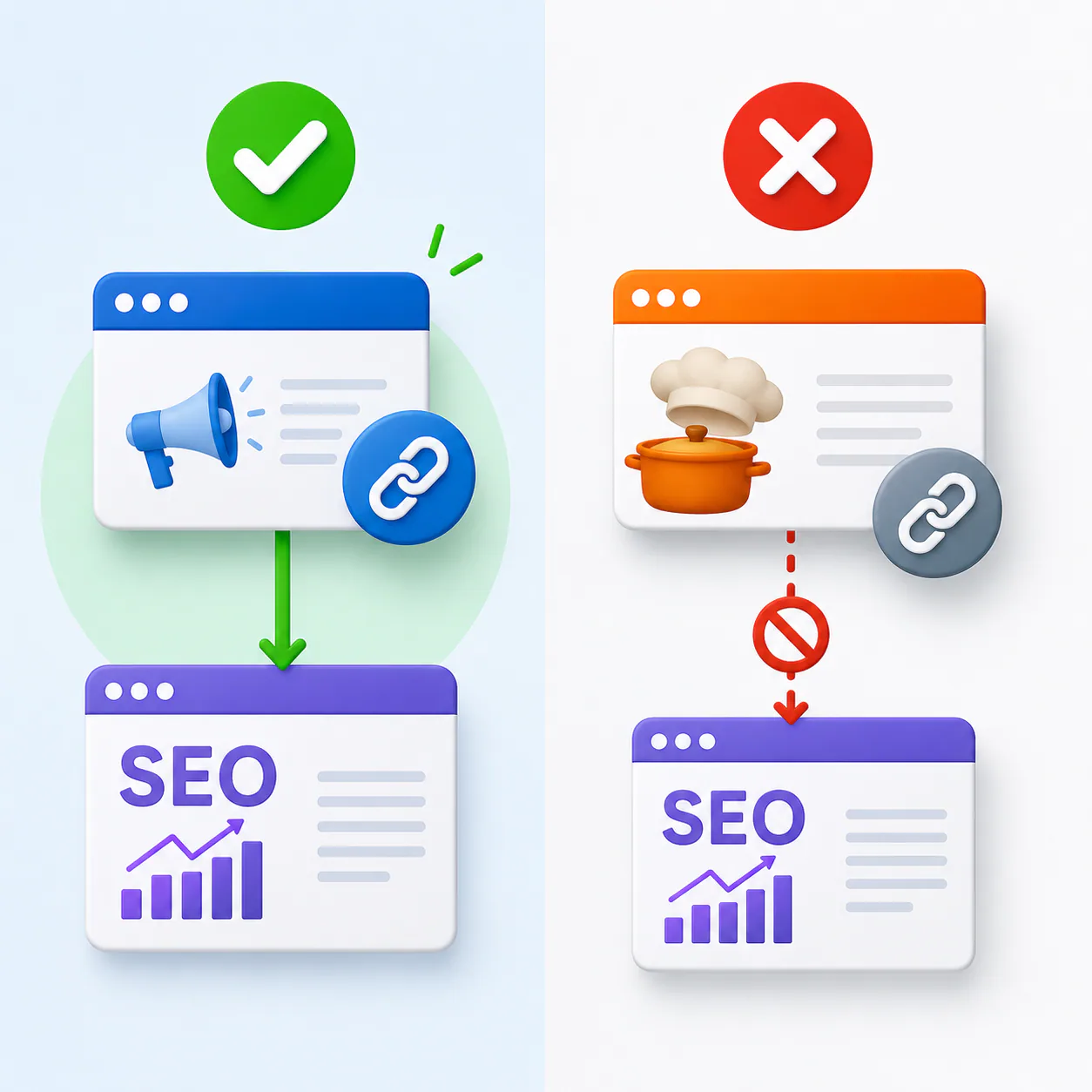
Relevance
the linking site and page should be topically related to your content. A backlink from a marketing blog to an SEO article is relevant. A backlink from a cooking blog to the same article is not.

Authority
links from sites with strong authority and trust signals carry more weight than links from new or low-authority sites.

Placement
links within the body of an article are more valuable than links in footers, sidebars, or author bios. Contextual placement signals that the link was included because it added value to the reader.
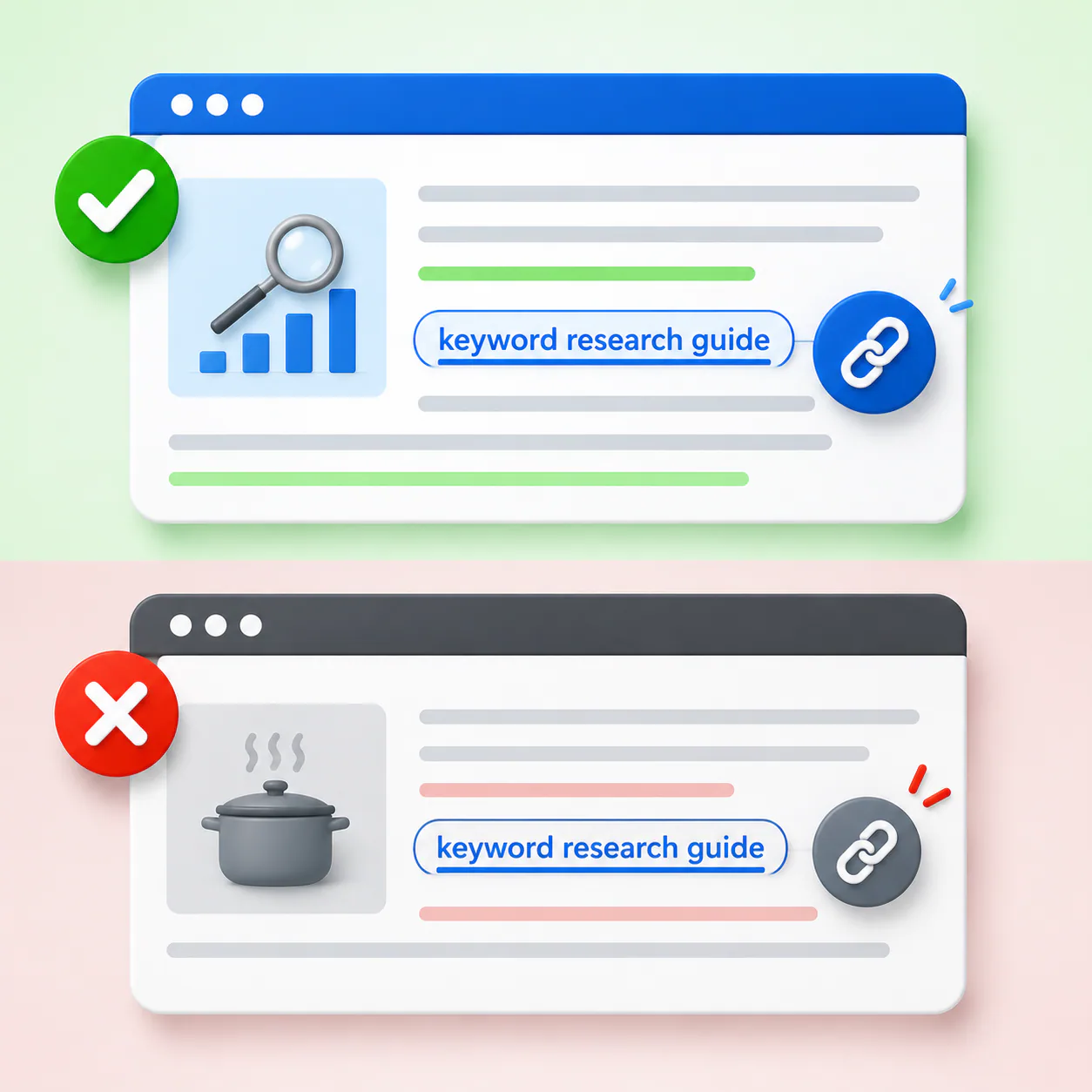
Context
the surrounding text should relate to the topic of the linked page. A link with anchor text "keyword research guide" embedded in a paragraph discussing SEO research methods carries stronger relevance signals than the same link placed at random.
The 12 Backlink Strategies — Quick Overview
Strategy 1 — Create Linkable Assets
Linkable assets are pieces of content specifically designed to attract backlinks because they provide something other sites want to reference. They are the foundation of every other strategy — without content worth linking to, outreach produces poor results regardless of volume.
Content that attracts backlinks consistently:
- Original research and data studies — stats that others cite in their own articles
- Comprehensive guides and tutorials — the definitive resource on a topic in your niche
- Free tools and calculators — embeddable utilities that others link to as a resource
- Infographics and visual data — shareable assets that make complex data readable
- Industry surveys and reports — original data that journalists and bloggers reference
Content that aggregates existing information earns fewer links than content that adds something new — a unique angle, original data, or a level of depth no existing resource provides.
Strategy 2 — Guest Posting
Guest posting involves writing content for other websites in your niche in exchange for a contextual link back to your site.
How to do it: Identify sites in your niche that publish guest content — most have a "Write for Us" or "Contribute" page. Pitch a specific article idea that serves their audience. Write the best piece you would write for your own site. Include one contextual link to a relevant page on your domain.
What works: Specific pitches to relevant sites with genuine audience overlap.
What to avoid: Guest posting purely for links on sites with no real audience. Google's SpamBrain system is specifically designed to detect and neutralize manipulative link schemes, including bulk guest post networks. Posts on real sites with real readers are both more valuable and lower risk. Google
Strategy 3 — Targeted Outreach
Outreach is the process of identifying pages that would benefit from linking to your content and contacting the site owner to suggest it.
How to do it:
- Identify pages that cover topics related to your content but do not currently link to it
- Find the contact email for the site owner — use Hunter.io (free tier available) to find email addresses from domain names
- Write a short, personalized email referencing something specific on their site and explaining clearly why your content adds value for their readers
- Follow up once after five to seven days if no response
What works: Personalized messages to relevant sites where your content genuinely fills a gap.
What does not work: Mass outreach with template emails. Site owners receive these constantly and delete them immediately.
Strategy 4 — Broken Link Building
Broken link building involves finding links on other sites that point to pages that no longer exist — and suggesting your content as a replacement.
How to do it:
- Use Ahrefs' Site Explorer or Screaming Frog (free up to 500 URLs) to identify broken outbound links on relevant sites in your niche
- Check whether you have existing content that could replace the broken link — or create a new piece to fill that gap
- Contact the site owner, reference the broken link by URL, explain it is returning a 404, and suggest your content as a replacement
Why it works: The site owner already intended to link to that type of content. You are removing an error from their site and providing a solution simultaneously. Conversion rates on broken link outreach are consistently higher than cold link requests.
Tool: Ahrefs (paid) is the most efficient tool for finding broken links at scale. Screaming Frog (free for up to 500 URLs) works for smaller-scale checks.
Strategy 5 — Resource Page Links
Resource pages are curated lists of links on a specific topic — "best SEO tools," "top marketing resources," "beginner's guide to digital marketing." They exist specifically to link out to useful content.
How to do it:
- Search Google for resource pages using queries like: "keyword" + "resources", "keyword" + "useful links", "keyword" + "recommended sites"
- Evaluate whether your content fits the curation criteria of the page
- Contact the curator with a short, specific pitch explaining why your page would be a valuable addition
What works: Content that fits the existing theme of the resource page precisely. A page listing "SEO tools for beginners" is a natural fit for a keyword research guide. A general marketing page is not.
Strategy 6 — HARO and Digital PR
Media request platforms connect journalists and bloggers with expert sources for articles they are writing. When your response is used, you typically receive a backlink from the publication — often a high-authority news or media site.
Current platform status: HARO (Help a Reporter Out) — the original platform — was rebranded as Connectively in 2024, which then shut down in December 2024. In April 2025, Featured.com acquired and relaunched HARO under its original name, restoring the free three-emails-per-day format with improved source verification and spam reduction. Contentellect
Active platforms in 2026:
- HARO (haro.com) — relaunched April 2025, free, three daily email digests with journalist queries
- Qwoted — free, connects journalists with vetted expert sources
- SourceBottle — free, connects bloggers and journalists with sources across multiple niches
- Featured.com — the platform that now owns HARO; also runs its own separate expert-source matching service
How to do it: Sign up as a source on one or more platforms. Receive daily digests with journalist queries in your niche. Respond to relevant queries with specific, quotable expert commentary in three to five sentences. Lead with the most useful information — not general background.
Why it works: Media backlinks from sites like Forbes, Business Insider, or industry publications are among the highest-authority links available. HARO provides a structured, free channel to earn them through genuine expertise.
What to avoid: Responding to queries outside your area of expertise. Journalists identify irrelevant or generic responses immediately.
Strategy 7 — Skyscraper Technique
The Skyscraper technique involves finding content that has already attracted significant backlinks, creating a substantially better version, and reaching out to sites linking to the original to suggest your improved version.
How to do it:
- Use Ahrefs Content Explorer or SEMrush to find highly-linked articles in your niche
- Analyze what the article covers and what it is missing — outdated data, thin sections, missing subtopics
- Create a version that is genuinely more comprehensive, more current, and more useful
- Contact sites linking to the original and explain that your updated version covers what theirs does not
Honest caveat: This strategy works best when your version is genuinely better, not just longer. A padded version of an existing article will not convert link prospects. Substantive improvement is the prerequisite.
Strategy 8 — Unlinked Brand Mention Reclamation
Every time someone mentions your brand, site, or content without linking to it, that is a conversion opportunity that requires minimal effort to capture.
How to do it:
- Set up Google Alerts (free) for your brand name, domain name, and the titles of your key articles
- When you find a mention without a link, contact the author or editor and politely ask them to add a link to the relevant page
Why it works: The person already knows about your site and chose to reference it. Converting a mention to a link requires one short email and produces a highly relevant contextual link.
Strategy 9 — Link Reclamation
Link reclamation involves recovering links to your own site that have been lost — because a page moved, was deleted, or had its URL changed without a redirect.
How to do it:
- Use Ahrefs or Google Search Console to find backlinks pointing to 404 pages on your domain
- Identify whether the linked-to content still exists under a different URL
- Set up a 301 redirect from the old URL to the current one — this recovers the link value automatically
- For broken links you cannot redirect, contact the linking site and ask them to update the URL
Why it works: These are links you already earned. Recovering them requires no new content creation and no cold outreach — just technical fixes that restore value already attributed to your domain.
Strategy 10 — Competitor Backlink Gap Analysis
This strategy identifies sites that link to your competitors but not to you — then targets them for outreach. These sites have already demonstrated willingness to link to content in your niche.
How to do it:
- Use Ahrefs Link Intersect or SEMrush Backlink Gap tool — enter your domain and two to three competitor domains
- The tool shows sites that link to competitors but not to you, sorted by authority
- Evaluate each site against your existing content
- Reach out with a specific, relevant piece of content that matches what they linked to on your competitor's site
Why it works: The cold outreach problem — convincing a stranger your content is worth linking to — is reduced because you know these sites already link to content like yours.
Tool: Ahrefs (from $129/month) or SEMrush (from $129.95/month). Both have dedicated backlink gap analysis features. Pricing verified May 2026.
Strategy 11 — Content Promotion
Content that is not seen will not earn links. Promotion is the distribution layer that makes every other strategy more effective.
How to do it:
- Share new content in relevant online communities — Reddit, LinkedIn groups, industry Slack groups, and niche forums
- Send new content to your email list with a clear explanation of what it covers and who it is useful for
- Notify anyone mentioned, cited, or featured in the article — they are likely to share it and may link to it
- Share on social channels with a framing that gives people a reason to click, not just a link drop
Why it matters: Link building outreach to a page with real traffic and engagement converts significantly better than outreach to a page that shows zero organic activity. Promotion creates the social proof that makes link requests credible.
Strategy 12 — Relationship Building
Relationships are the long-term infrastructure of sustainable link building. The previous eleven strategies produce links from individual actions. Relationships produce links repeatedly over time.
How to do it:
- Engage genuinely with content from writers and site owners in your niche — comment thoughtfully, share their work, reference their research in your own articles
- Collaborate on content — co-authored guides, expert roundups, joint research — that serves both audiences and produces links from both sides
- Link to other people's content in your own articles, mention their work, recommend their resources. People who receive links tend to give them
Why it works: A writer who knows your work will link to you unprompted when they write something relevant. Relationship-built links are the most sustainable category because they generate without ongoing outreach effort.
Common Backlink Mistakes
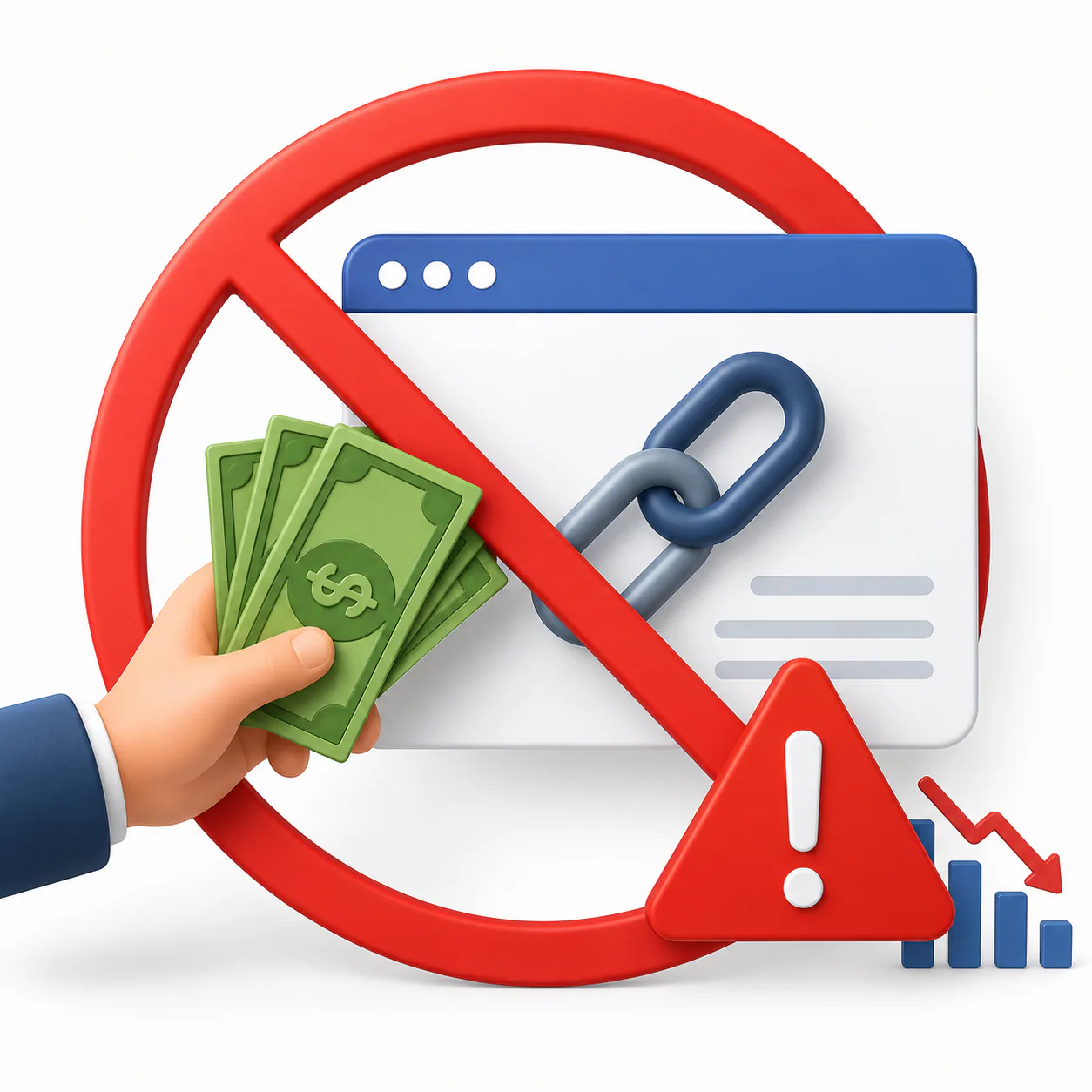
Buying backlinks
paid links not tagged with rel="sponsored" violate Google's link spam policies. Sites caught with paid link schemes can receive manual penalties or significant ranking losses from automated systems like SpamBrain. The short-term boost is not worth the permanent risk. Google

Using spammy tactics
private blog networks, link farms, and automated link schemes produce links that either carry no value or actively harm your domain. What worked in 2012 does not work in 2026.

Ignoring content quality
links to thin or low-quality content do not produce ranking improvements regardless of the linking site's authority. Fix the content before building links to it.

Over-optimizing anchor text
if every backlink to your site uses the exact same keyword-rich anchor text, it looks manipulative. Natural link profiles include brand names, partial phrases, generic terms, and naked URLs. Diversity is the signal of earned links.

Building links before the content is ready — links to a page that does not yet satisfy search intent produce weaker results than links to a page that already ranks well organically. Build the content first, then accelerate with backlinks.
Frequently Asked Questions About Getting Backlinks
Are backlinks still important in 2026?
Yes. Despite Google's many algorithm updates, backlinks from relevant and authoritative sites remain one of the strongest ranking signals in organic search. What has changed is how Google evaluates them — quality, relevance, and editorial context matter significantly more than volume alone. Volume without quality is no longer a viable strategy.
How many backlinks do I need to rank?
There is no fixed number. It depends on the competitiveness of the keyword, the authority of sites currently ranking for it, and the quality of your content. Use Ahrefs or SEMrush to check the backlink profiles of the top five results for your target keyword — that gives you a realistic benchmark based on what is actually ranking, not a theoretical target.
What is the difference between a backlink and a referring domain?
A backlink is a single link from one page to another. A referring domain is a unique website that links to your site at least once. One site can link to you fifty times — that is fifty backlinks but one referring domain. Referring domains are the more meaningful metric because search engines weight unique domain diversity more heavily than total link count from the same sources.
Can I get backlinks without spending money?
Yes. Google Alerts for brand mentions, HARO for media links (free after its April 2025 relaunch), broken link building using Screaming Frog's free tier, and manual outreach using Hunter.io's free plan are all zero-cost strategies. The investment is time, not budget. Paid tools like Ahrefs and SEMrush accelerate the process significantly but are not required to start.
Do social media links count as backlinks?
Social media links are almost universally nofollow — they do not directly pass SEO value. However, social shares increase content visibility, which increases the chance that a writer or site owner discovers and links to your content editorially. Social media is a distribution channel that supports backlink acquisition rather than a direct source of ranking-relevant links.
Conclusion
Backlinks are not just about quantity — they are about trust. Search engines use them to evaluate whether your content deserves to rank alongside the best results for a given query.
The most effective approach combines strong content that earns links passively over time, targeted outreach to amplify that earning, and relationship building that makes future links require less effort than current ones. Each layer compounds the one before it.
Start with the content. Then promote it. Then build the links.
This guide connects directly with the on-page SEO checklist, the keyword research guide, and the digital marketing strategy guide — use them together to build a complete, compounding organic system.
Primary Sources
- Ahrefs. Backlink research and referring domains data. ahrefs.com
- Google Search Central. SpamBrain and spam updates. developers.google.com/search/updates/spam-updates
- HARO. Relaunched April 2025 under Featured.com. haro.com
- Hunter.io. Email finder tool. hunter.io
- Google. Google Alerts. google.com/alerts

About the Author
Maan C. is a Filipino writer, blogger, and self-described frustrated journalist who finally found her voice through writing. She holds a degree in psychology, a diploma in Special Education, and spent eight years in the classroom — teaching English as a Second Language to Korean students and handling preschool classes before stepping away to raise her family. After a decade as a full-time mother, she re-entered the workforce as a company-trained SEO specialist and virtual assistant, rebuilding her career from scratch before pivoting to full-time blogging. She writes about everything that genuinely interests her — technology, AI, education, careers, freelancing, travel, finance, real estate, and more — drawing from lived experience, serious research, and a lifelong habit of wanting to understand how things actually work. She describes AI as the tool that finally let her write the way she always wanted to: freely, clearly, and without holding back. Read more of her work at pixelscoop.com.
In this article, Maan writes from her background as a company-trained SEO specialist and her ongoing work as a full-time AI-assisted content creator.